

The South West Edge: Our Off-Grid 4WD Road Trip Along Western Australia’s South Coast

Hi! We’re Jelmer and Fennechien from Aurore Overland, a Dutch 4WD camper hire company based in Perth. More than two million people live in this beautiful coastal city, but the moment you leave Perth behind, you enter the vast open wilderness that Western Australia is famous for. It’s no surprise Perth is often called the most isolated city in the world. And that’s exactly what makes it the perfect place to kick off your ultimate 4WD road trip.
In this blog, we’re taking you along on one of our favourite routes: The South West Edge. An adventurous 3,000-kilometre road trip along the spectacular south coast of Western Australia. Starting in Perth, we travel through the Margaret River Region to Cape Leeuwin, cross the Yeagarup Dunes and D'Entrecasteaux National Park, visit Denmark and Albany, explore the impressive Stirling Range National Park, and finish among the dazzling white beaches of Esperance, Lucky Bay and Cape Le Grand National Park. From there, we make our way back to Perth through the wide open landscapes of the Wheatbelt.

Best Time to Do This Road Trip
We did this trip in January and February, right in the middle of the Australian summer. Around this time of year, Perth can get seriously hot, with temperatures of 37–39°C not uncommon. Down in the south of Western Australia though, the climate is much more comfortable. Along the south coast especially, it can actually feel surprisingly cool at times, mainly because of the strong winds coming off the ocean.
That’s why we packed plenty of warm jumpers and long pants alongside our summer clothes. The weather in this part of WA can change quickly thanks to the influence of the Southern Ocean and shifting ocean currents.

For the south-west coast, the best time to travel is generally between November and April. During these months, you’ve got the best chance of sunny, dry weather and comfortable temperatures for road trips, beach days and hikes like the Cape to Cape Track. January and February are perfect if you’re keen on swimming, surfing and making the most of those long summer days, although it can get extremely hot further inland.
If you prefer milder temperatures and fewer crowds, November, December or March are great options. The weather is often still beautiful, but popular spots are usually a lot quieter. During the Australian winter, from June through to August, the region becomes much greener and more peaceful. It’s also one of the best times of year for whale watching along the coast, although the water can be pretty chilly for swimming and beach days.
Our Tip
Allow at least 2.5 to 3 weeks for this road trip. Distances in Western Australia are huge, and you’ll want plenty of time along the way for hiking, swimming and off-grid camping.
Getting Ready for Departure
At the Aurore Overland headquarters in Perth, the 4WD campers are fully packed and the fridges carefully stocked before setting off.
For this trip, we’re travelling with two vehicles. Friends of ours are hitting the road with their baby in the Ultimate Off-Grid Explorer, while we’re heading off in our own Ford Ranger 4WD camper together with our three kids, aged 10, 8 and 4.

Fully Equipped for Off-Grid Travel
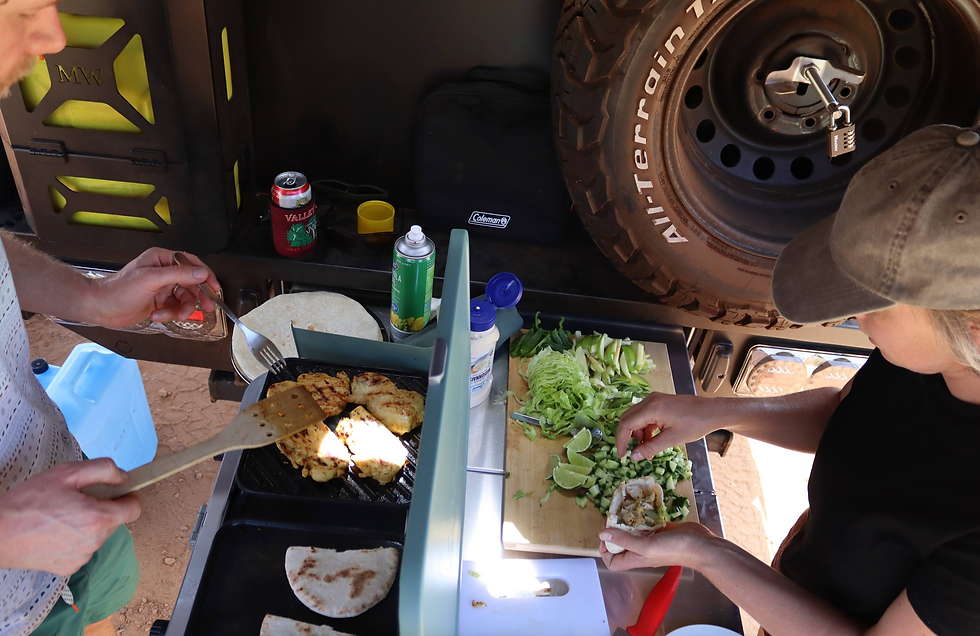
Both vehicles are fitted out with rooftop tents, solar panels and fridges designed for off-grid travel. The camper also comes with an additional three-person tent and a built-in kitchen, allowing us to camp completely self-sufficiently and off-grid.
Both campers are fully equipped with all the necessary recovery gear and complete camping equipment, so we’re well prepared for remote tracks and longer periods away from civilisation. Check out the factsheet for the Ultimate Off-Grid Explorer for the full camper inventory list.
Our Tips
Download offline maps beforehand using apps like WikiCamps Australia or MAPS.ME. In large parts of Western Australia, you’ll have little to no phone reception.
Stock up the camper with plenty of long-life food and essentials before leaving Perth. It’s common to go days without seeing a supermarket, and groceries in small country towns are often much more expensive.
Perth – Margaret River Region
From Perth, it’s about a three-hour drive to the Margaret River Region. We stay slightly further north, in Leeuwin-Naturaliste National Park.
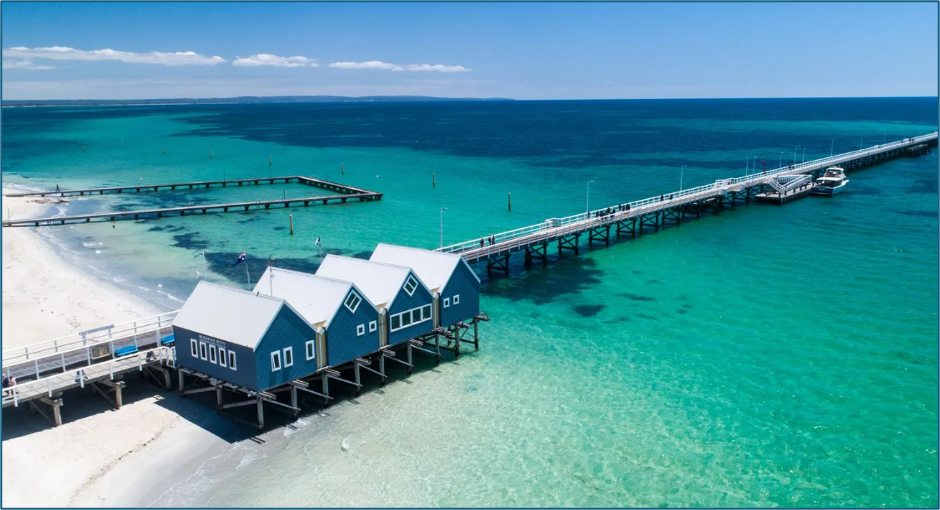
On the way down, we stop in Busselton to visit the beautiful Busselton Jetty. At the end of the jetty, there’s an underwater aquarium where you can even go snorkelling — great fun with kids! Afterwards, we continue on to Dunsborough for a swim at the stunning Meelup Beach.
Our Tip
Because the jetty is quite long and there’s very little shade along the way, we’d definitely recommend taking the little train to the end of the Busselton Jetty. It saves you a long walk in the full sun and makes the visit much more comfortable, especially with kids.
From Cape Naturaliste in the North to Cape Leeuwin in the South
The Margaret River Region stretches from Cape Naturaliste in the north all the way down to Cape Leeuwin in the south. Both ends are connected by the famous Cape to Cape Track, a hiking trail that follows the coastline almost the entire way.
We choose a small section of this 130-kilometre track, passing stunning beaches, rugged rock formations and the famous Injidup Natural Spa. The coastline here is beautifully wild and dramatic. Dolphins are often spotted offshore, and for anyone into surfing, this entire stretch of coast is absolutely world-class.
Just a few kilometres inland though, the scenery changes completely. Here you’ll find the lush rolling hills, forests and vineyards that make this region so popular with travellers.
Injidup Natural Spa
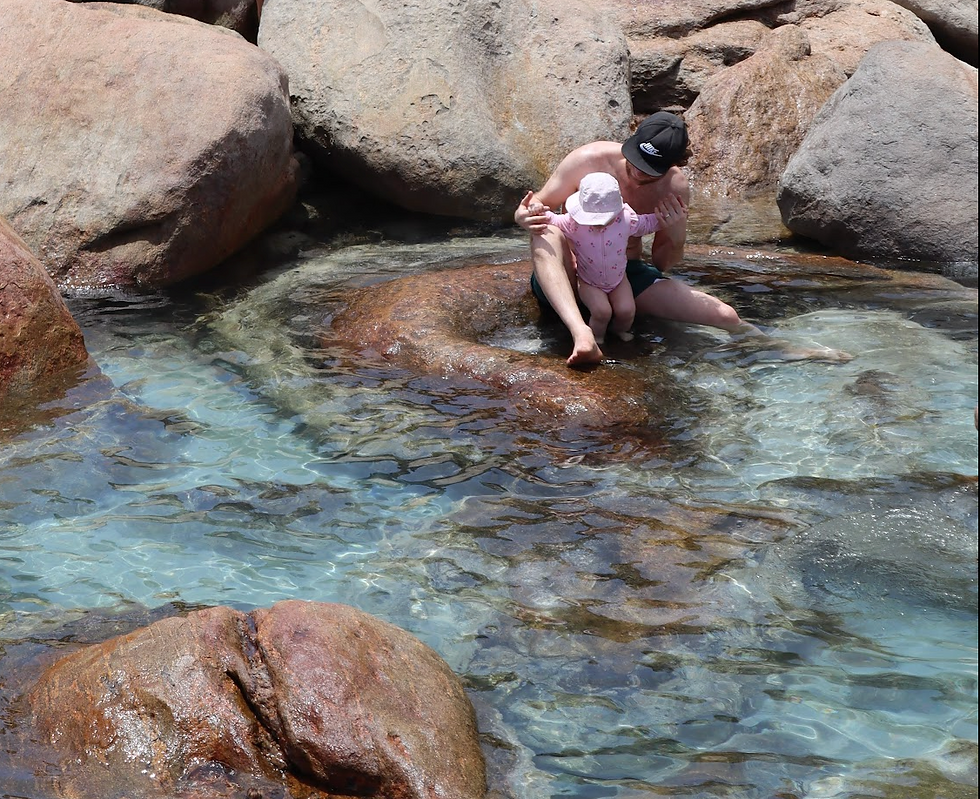
At the Injidup Natural Spa, we spend plenty of time swimming with the kids. This natural rock pool is such a unique experience. As waves roll in from the ocean, water is forced through the rocks and into the “spa”, causing the water to bubble and surge like a giant natural jacuzzi. For the kids especially, it’s incredible to feel the ocean constantly refill the pool with foamy, swirling water.

Our Tip
We recommend getting here very early in the morning. At that time it’s usually still quiet, and you can really enjoy the magic of this place and its crystal-clear water. Later in the day it can get very busy, especially during holidays and weekends.
Wineries and Breweries
Just a few kilometres inland, the landscape changes completely. Here you’ll find rolling hills covered in vineyards, forests, kangaroos and small country towns. This region is home to many wineries and breweries.
It’s very common to visit them during the day, often around lunchtime or for an early dinner. Many wineries and breweries are also very family-friendly and often have playgrounds for kids.
Our Tip
In Australia, an early dinner (around 4:00–5:00 pm) is quite normal, especially with young children. Many kitchens also close early, particularly outside the major cities.


Margaret River Region – D’Entrecasteaux National Park
After a few days in the Margaret River Region, we prepare ourselves for a few days of off-grid camping in the largest dune system in the Southern Hemisphere: the Yeagarup Dunes.
Because there is no diesel, water or food available inside the national park, we top up all our supplies in Augusta and do our final grocery run. The Aurore Overland Off-Grid Explorer is equipped with a built-in 45-litre water tank, plus an additional 20 litres of water storage in separate tanks in the canopy. We also fill the 20-litre outdoor shower tank, as well as the extra 20-litre diesel tank on top of the main 80-litre fuel tank.
Our Tip
Always make sure you carry enough drinking water and top up your tanks whenever you have the opportunity. Many campsites in remote areas do not have access to drinking water.

Campsites in Western Australia’s National Parks
It’s important to know that all national parks in Western Australia require a park pass. The Aurore Overland camper includes a park pass that is valid for all national parks across Western Australia.
Wild camping is not allowed, so it’s essential to book campsites in advance. Through Explore Parks WA, you can find all campsites within the state’s national parks. Many of these campsites are small and therefore book out well ahead of time, especially since Australians themselves are keen campers. Most park campgrounds are also unstaffed, which means it’s important to be well prepared and fully self-sufficient. Aurore Overland is happy to help plan and book your entire trip, including routes and campsites.
Our Tip
Many campsites are booked out months in advance, especially during school holidays and peak season. It’s therefore a smart idea to lock in your route and accommodation well ahead of time.
Farmstays
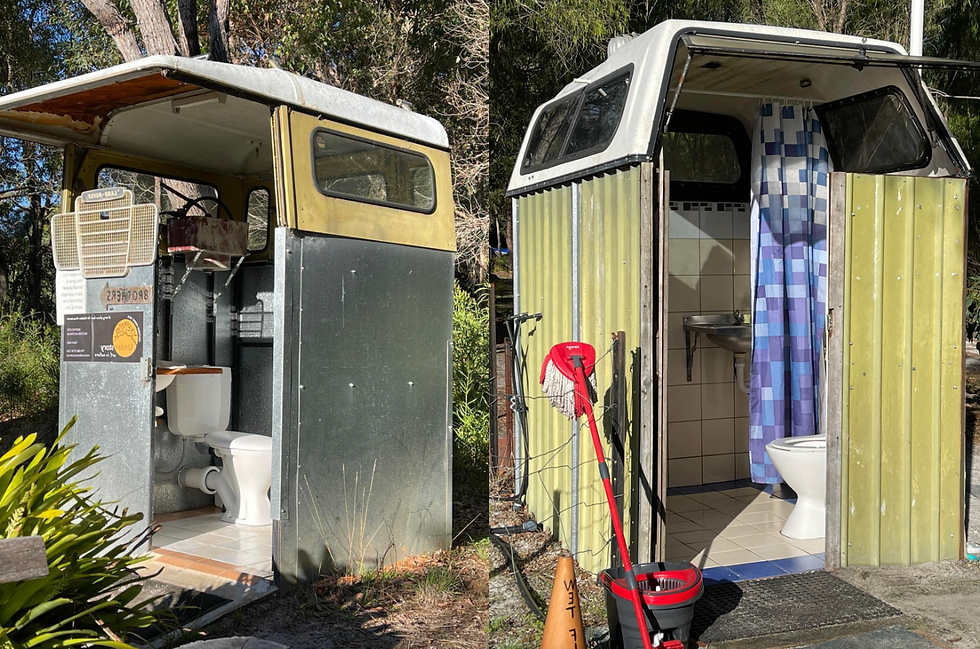
In addition to national park campsites, farmstays offer a unique experience. These are small campsites located on working farms, often surrounded by nature and far from the crowds. Facilities are usually basic, with a camp kitchen, toilet and sometimes a shower.
That simplicity is exactly what makes them so special — many are creatively built using recycled materials, and you’ll often find some of the most unique outdoor showers here. You’re usually welcomed personally by the farmer or farm owner, who is happy to share insider tips about the area, hidden gems and local activities.
Farmstays are also great for kids, as there are often animals they can help feed or care for. Around the campsite you’ll frequently spot wildlife such as emus and kangaroos. Farmstays can easily be booked through Hipcamp.

Screenhouse for Extra Shelter
During this trip, we also brought the Oztent Screenhouse Hex, which we ended up using constantly along the way. In Western Australia it can get very windy, and especially inland and on farmstays there are often a lot of flies. With kids, having an extra sheltered space is therefore incredibly useful.
The Screenhouse provides protection from sun, wind and rain, but most importantly from flies during mealtimes. It allows you to comfortably live outside even when conditions are less ideal. For us, as a family travelling off-grid and camping in remote locations, it was a really valuable addition to our camping setup. You can add the Screenhouse as extra gear when hiring from Aurore Overland.
Our Adventure in the Yeagarup Dunes
The entrance to the Yeagarup Dunes is about a 2-hour drive from Augusta and is located within D'Entrecasteaux National Park. The sand in these dunes is some of the finest you’ll find in Australia, so we reduce our tyre pressure at the park entrance down to 10–12 psi (0.75 bar). We use automatic tyre deflators, which allow us to deflate all four tyres at once to the set pressure — saving a lot of time.
The Aurore Overland Off-Grid Explorer is also equipped with an onboard air compressor, which we use when we return to inflate the tyres back up to 44 psi (3 bar).

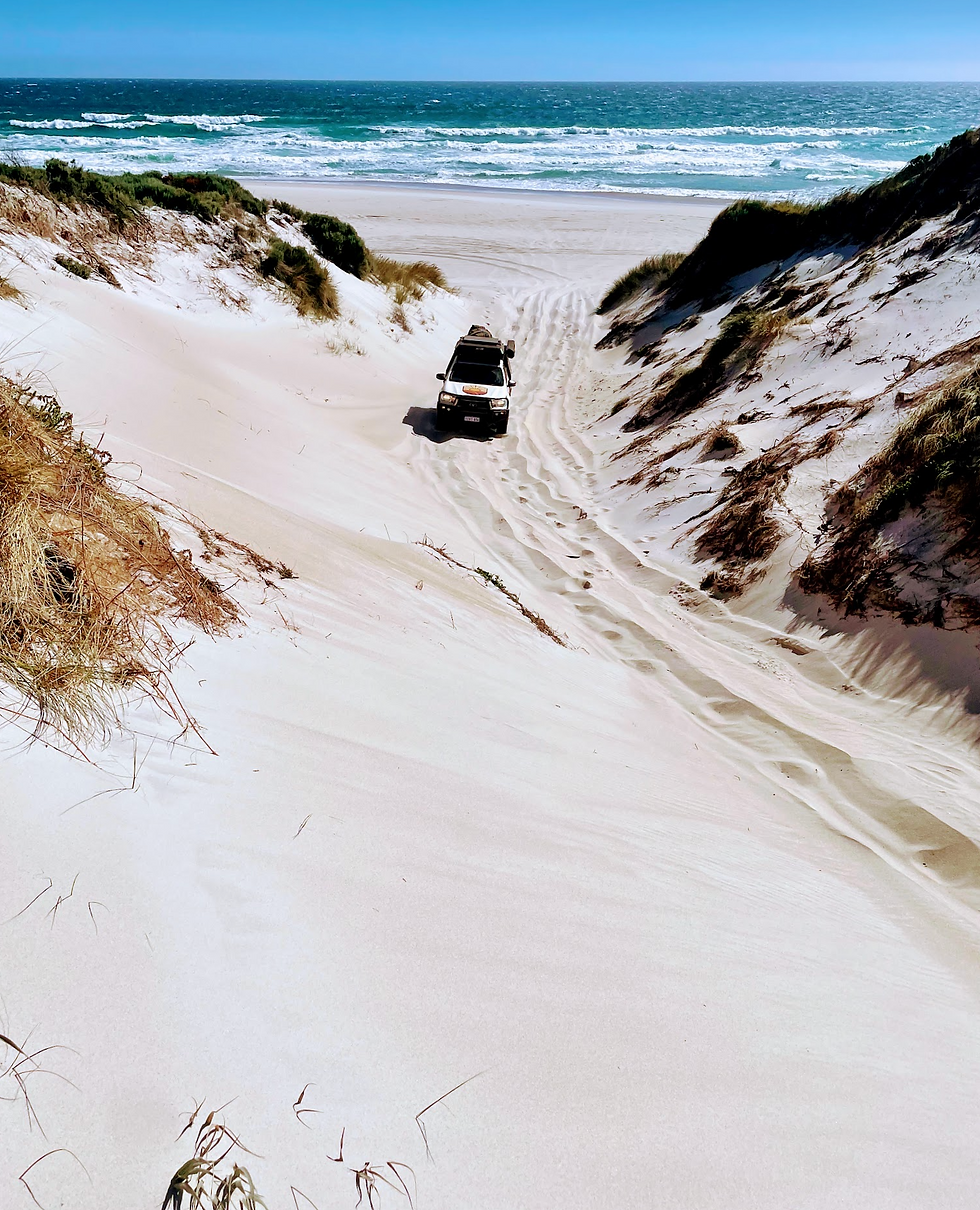
From the moment we enter the dunes, everything slows down. We drive through soft sand towards the Southern Ocean and, after a few hours, find a beautiful spot to set up camp. It’s an incredible experience to drive for hours through such an expansive dune landscape without seeing another person. Some sections almost look like ski slopes, with high sand dunes and deep tracks weaving through the terrain.
For the kids, it can be quite exciting at times, as we need to maintain enough momentum in many sections to avoid getting bogged in the soft sand. We often feel the vehicle working hard as it pushes through the loose sand and tackles steep dune climbs. That’s exactly what makes this journey so adventurous: deep in nature, with no reception or other people around, completely surrounded by sand, wind and ocean.
Our Tip
When driving in soft sand, always keep your speed steady and controlled. Accelerating too hard usually has the opposite effect and increases your chances of getting stuck.


Our Power Setup
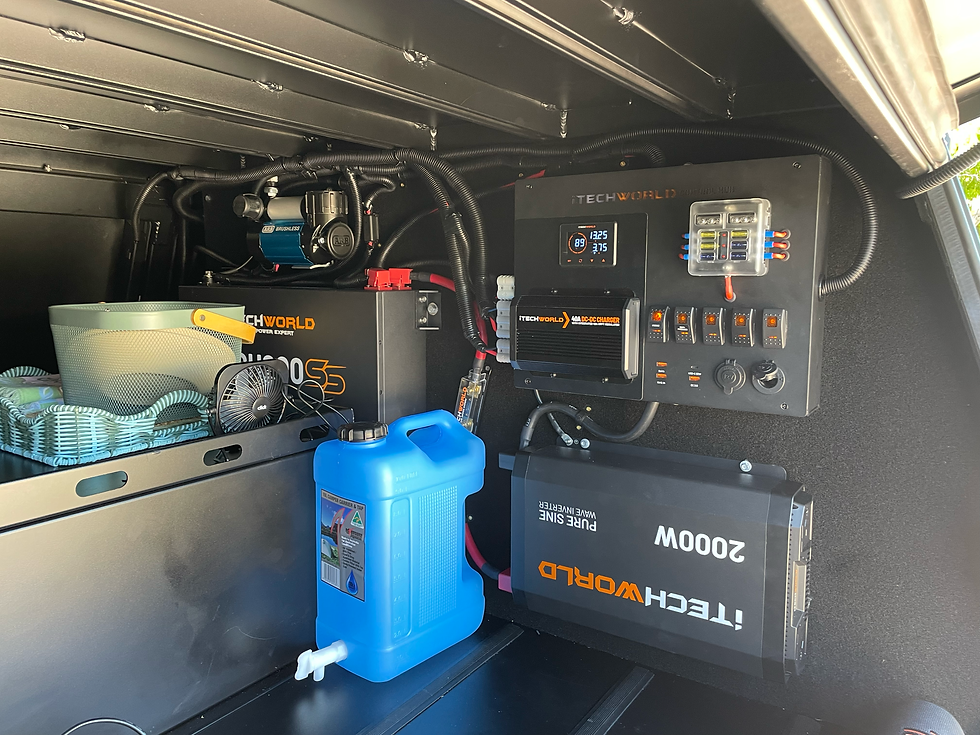
The Aurore Overland Off-Grid Explorer is equipped with a 200Ah lithium battery, providing enough power to stay off-grid for several days. The battery is charged via the solar panel as well as while driving.
It features built-in switches for the fridge, the internal canopy lighting, awning and rooftop tent, as well as a dedicated switch for Starlink internet. The system also includes a built-in 2000-watt inverter with two 240V outlets, allowing us to run appliances such as a kettle or toaster when needed.
A Unique Off-Grid Experience
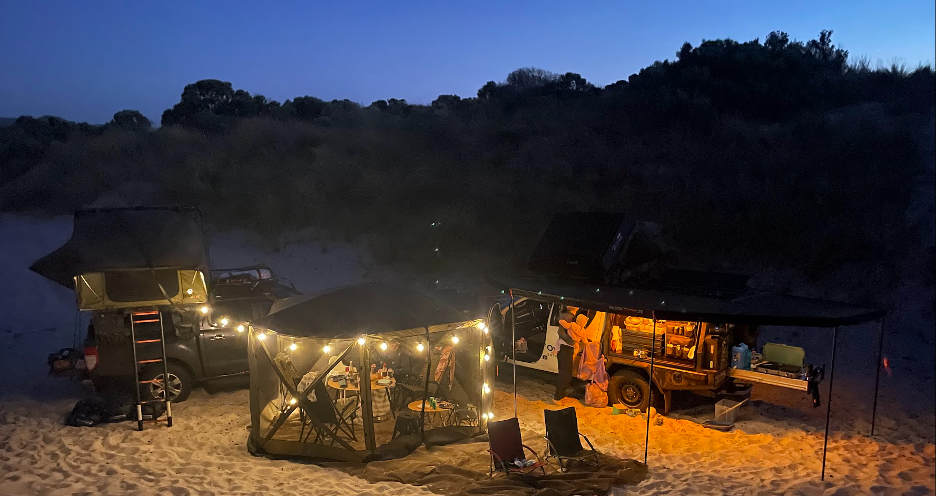
Camping in the Yeagarup Dunes is a truly unique experience, where you can go days without seeing another person. With the gear you bring and a fully equipped 4WD camper, you are completely self-sufficient in the middle of nature.
The kids can play freely in the vast sand dunes, while you enjoy swimming in the ocean, peace, space and the true feeling of off-grid freedom.


Recovery Gear
After a few wonderful days of off-grid camping, we continue our journey. We leave early, around sunrise, so we have enough time to drive through the soft sand and exit the park safely.
Along the way, we get stuck several times. Fortunately, the Aurore Overland Off-Grid Explorer is equipped with recovery boards and a shovel, allowing us to dig ourselves out again. Before getting back onto the sealed road, we use the onboard air compressor powered by solar energy to reinflate the tyres.

Denmark – Albany – Stirling Range National Park
After a stopover in Pemberton, we arrive in Denmark. Here we stock up on groceries and refill our diesel and water tanks.
In Denmark, we also stop at Elephant Rocks and Greens Pool, two stunning beaches perfect for snorkelling and swimming. The water along the south coast is crystal clear, but quite cold. It’s recommended to bring a wetsuit if you plan on snorkelling for longer periods.

Stirling Range National Park
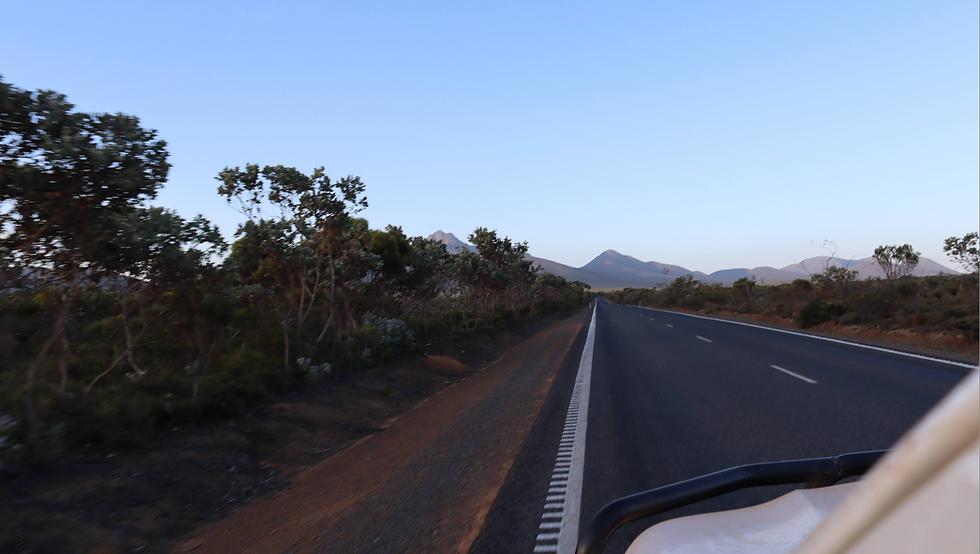
After a few days, we head towards Stirling Range National Park. This is a mountain range with the highest peaks in Western Australia, located about an hour and a half north of Albany.
Along the way we see plenty of emus and kangaroos by the roadside. These animals can cross the road unexpectedly, so it’s important to drive carefully, especially at dawn and dusk when wildlife is most active. As we approach the mountains, it starts getting dark, so we arrive just in time.

Spectacular Climb
The campsite we chose is Stirling Range Retreat. This campground is centrally located and sits right next to the highest peak in the park, Bluff Knoll, which rises 1,095 metres above sea level.
For our hike the following day, we chose Mount Toolbrunup. At 1,052 metres, it is the third-highest peak and far less visited, offering a steeper and more spectacular climb. We only met four other hikers throughout the entire day. This walk easily deserves a full day. The mountain is about a 30-minute drive from the campsite, and the hike itself takes around 3–4 hours. It is classified as a Grade 5 hike (very challenging), but it is manageable with children around 10 years old.
Our Tip
Make sure to bring plenty of water and sturdy hiking shoes. The terrain is steep and rocky, and there is very little shade.


Washing Machines and a Swimming Pool
The campsite itself is highly recommended after a few days of off-grid camping. Stirling Range Retreat has a large and welcoming camp kitchen, hot showers, and washing machines — perfect for finally getting the red dirt out of your clothes.
For families with kids, it’s an especially great stop, as the campsite also has a swimming pool where the kids can spend hours relaxing and playing after a day of hiking in the mountains.


Fitzgerald River National Park – Esperance
From the Stirling Range, it’s about a three-hour drive to our next destination: Fitzgerald River National Park. The final stretch of the journey is off-road, and we arrive at Hamersley Inlet.
We find a track leading down to the beach and cast a fishing line for our evening meal. After a good catch, we head back to set up camp, but first we still have a bit of work to do. The area we’ve driven into is very soft. After letting the tyres down even further, we manage to get unstuck again using a shovel and recovery boards, and continue on our way.


Hamersley Inlet Campground
We’ve booked a campsite at Hamersley Inlet. Like many campgrounds in national parks, there are no shower facilities. Fortunately, the camper has an outdoor shower that we can place in the sun, giving us enough warm water for a seven-minute shower.
After a few beers and a freshly cooked fish, we climb into the rooftop tent and get ready to leave early the next morning towards Esperance.

Esperance – Lucky Bay – Wharton Beach
After breakfast among the kangaroos, we leave at 8am and head towards Esperance. We arrive around midday and decide to have lunch at Lucky Bay beach.
The Aurore Overland Off-Grid Explorer is fully equipped and even includes grill plates that can be used as a barbecue. In Western Australia, there is a total fire ban during the summer months (December to March). However, gas barbecues are still permitted.
Our Tip
Always check the current fire bans before you set off. These can change daily during the summer season.


Crystal Clear Water and Pure White Beaches
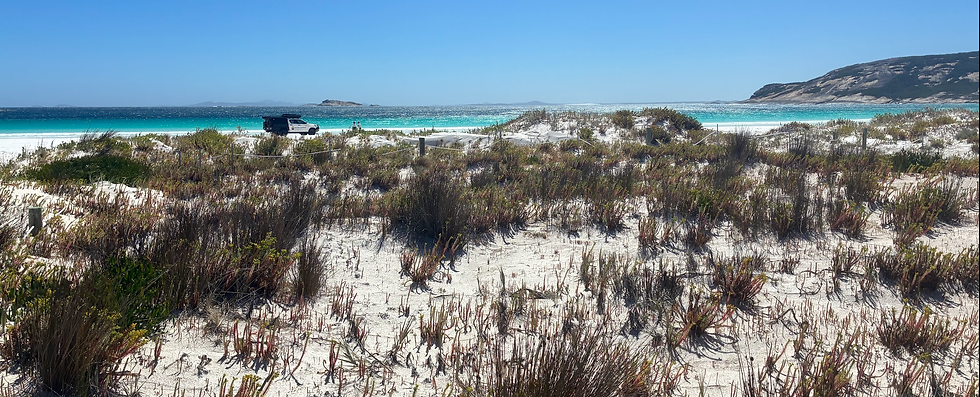
The water around Esperance and Lucky Bay is an intense, crystal-clear blue, and the beaches are brilliant white because they are made up of pure quartz sand. In fact, the beaches are so white that they are visible from space and are used by NASA to calibrate satellites.
We had overcast skies on this day, but luckily we took plenty of time to explore this incredible area. With so many different beaches and bays to choose from, you often find yourself completely alone on the sand.


Cape Le Grand National Park
The most beautiful campsites near Esperance are located in Cape Le Grand National Park. The park is accessible by road, but there is also a 20-kilometre stretch of beach connecting Esperance to Le Grand Beach.
Inside the park you’ll find some of the most stunning little bays, which makes it a very popular destination for visitors. Despite that, it often still feels quiet, as the campgrounds are small and limited in number. Booking well in advance is therefore essential. Aurore Overland can help secure your dream campsite and plan your trip.


Wharton Beach
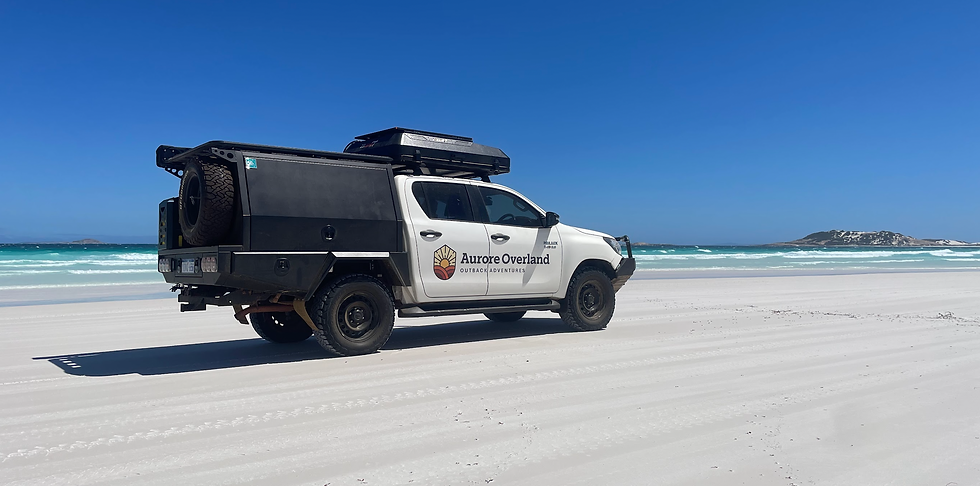
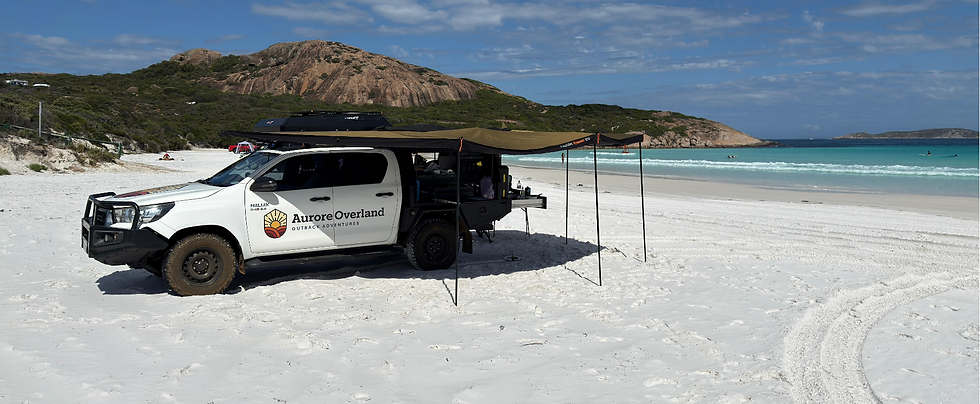
After a few days at Cape Le Grand National Park Campground, we continue on to Wharton Beach. This beach is known as one of the most beautiful in the world. Thanks to its remote location — around 800 km from Perth and 2,250 km from Adelaide — it remains surprisingly quiet, even during school holidays.
Here you can drive along the beach and easily find a spot to park your camper for a break. With the awning up, you can create a comfortable shaded area in no time.
Duke of Orleans Bay
In this area there is only one campground: Duke of Orleans Bay Caravan Park. This iconic campsite is often booked out well in advance, especially during school holidays and peak season. Fortunately, there is also an overflow area where you can often still find a spot when the main campground is full.
The park also has a simple but handy restaurant and a small shop with basic supplies. You can even hire small outdoor fire pits here, which are often allowed to be used year-round. This makes it a practical and comfortable base for exploring the vast coastline around Wharton Beach and Duke of Orleans Bay.


Return Journey with a Stop at Wave Rock
Then it’s time for us to pack up and head back towards Perth. We choose an inland route through the Wheatbelt and cover the distance in one day. It’s roughly a ten-hour drive, so still manageable.
Along the way, we make a short stop at Wave Rock — a very unique rock formation near Hyden shaped like a giant ocean wave.

A Road Trip Full of Unforgettable Memories
The South West Edge was much more than just a road trip through Western Australia. It was an adventure we will never forget. Travelling to such remote places is exactly what makes this route so special. For days on end you’re surrounded by nature, far away from crowds, phone reception and tourism. Sometimes all you hear is the wind, the ocean and the sound of birds around you.
That feeling of being completely off-grid and living alongside nature is hard to describe until you’ve experienced it yourself. Waking up on deserted beaches, cooking under the stars and spending endless evenings around camp creates an incredible sense of freedom.
For us, as families and friends, this was perhaps the most meaningful part of the journey. Without distractions from phones, schedules or screens, we truly spent time together. Driving, cooking, fishing, hiking, setting up camp and simply enjoying the surroundings created memories far more valuable than any luxury holiday could offer.


Comments